
Ultra-Modern Farm
This red onion was transplanted on February 6 to 7, 2026. It covers ¾ of an acre. It’s Red Cornet F1 variety which is known for its resilience – especially if it rains during harvest season. The variety produces medium to large bulbs (“stones” in broker terms) giving the farmer very good tonnage
The planted plot sits on virgin land where crops have never been grown before. Such land presents a mixed bag of fortunes. The main benefit is the lack of soil borne pathogens but there are challenges too like limited capillary action in the soil which impacts irrigation efforts.
Soil Test
As usual we did a free soil test and presented the results to an agronomist to help guide the farmer on where to start – which farm inputs to buy and the most appropriate application timing. This is the farming calendar you have heard us mention.
The soil pH ranged between 5.8 to 6.2 which is almost at the optimal (6-7) for thriving onions. One of the reasons attributed to this is limited organic matter as the soil has not been disturbed before to incorporate them within its structure. Also because of the limited capillary action, light, frequent irrigation was recommended.
The starting NPK levels ranged from 7:11:25 mg/kg to 18:25:58 mg/kg. The advice from agronomists was to add 3.5 tonnes of well-rotted organic manure followed by 35 kg of DAP before transplanting.
Other recommended products included:
- A high-phosphorus foliar
- Biostilumulant
- Calcium foliars for strength
- Bulbing foliars
- A preventive and a curative fungicide
- Two different types of pesticides
- CAN for better leaf growth
- A high phosphorus fertilizer for weight and shelf-life
With this information at hand, the farmer is set for a good run in the field.
The Transplant
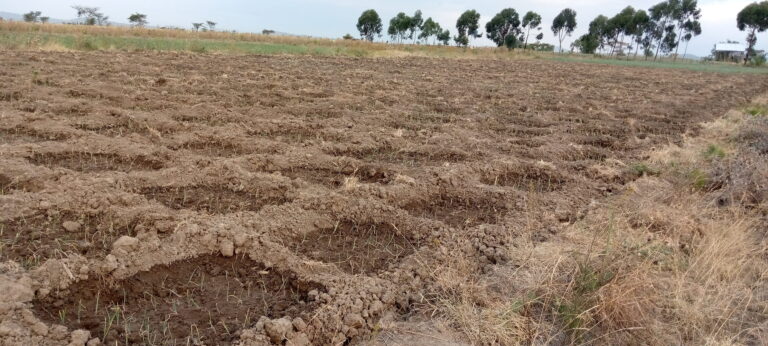
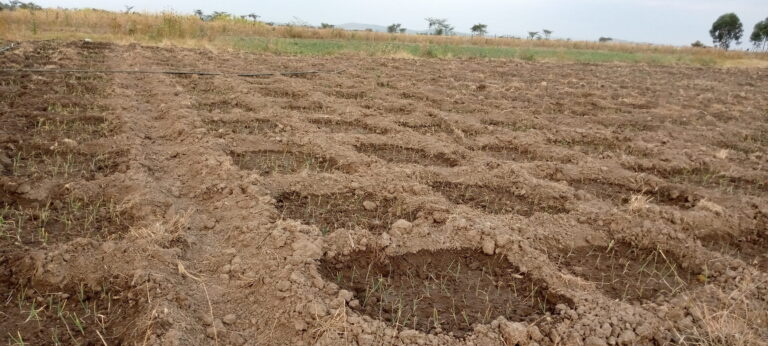
As you can see, we did the transplant in the first week of February when the sun is scorching in Laikipia and the soils are bone-dry after all the January sun. However, our water supply system is good enough to cope with such demanding situations so we made the transplant without any hitches. We had scheduled it for 1 day but extended it to the second day because the nursery had a mixture of big and very small onion seedlings.
That’s why it’s very important for the nurseries to have uniform growth and pencil thick seedlings. It saves you from unnecessary costs and enhances survival after transplant.
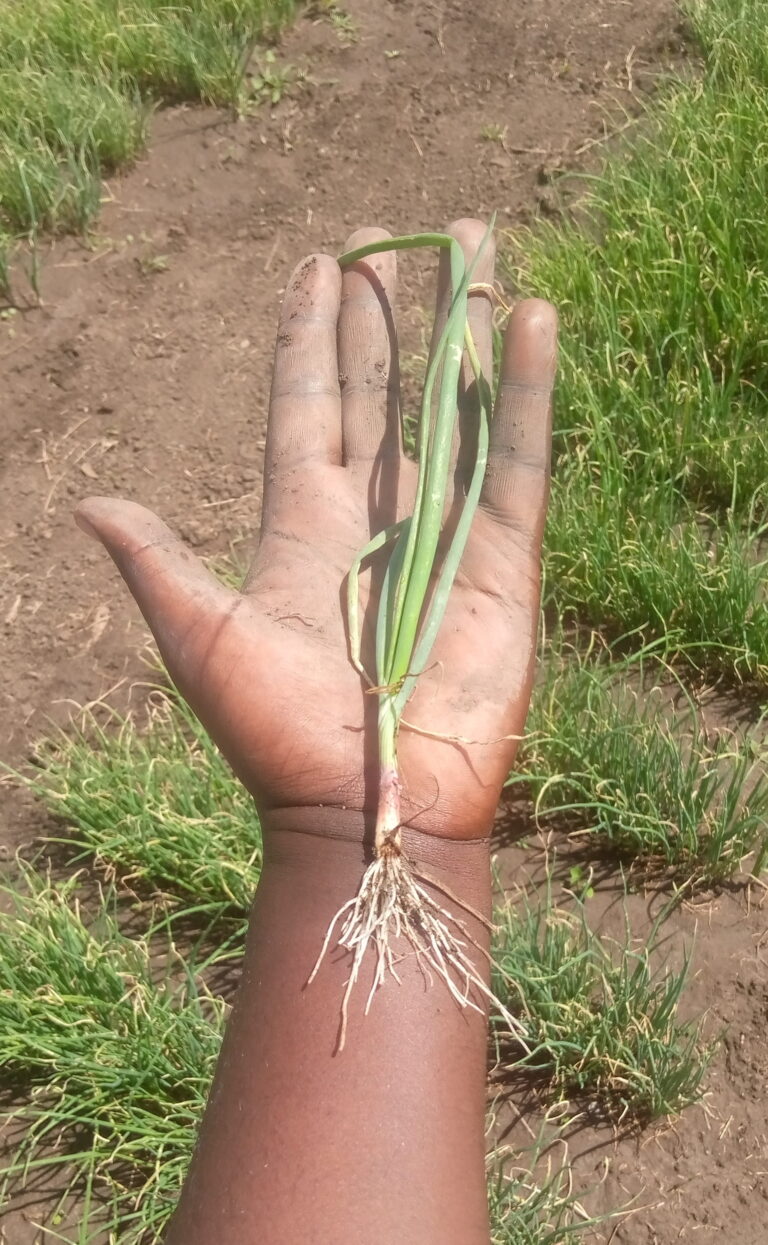
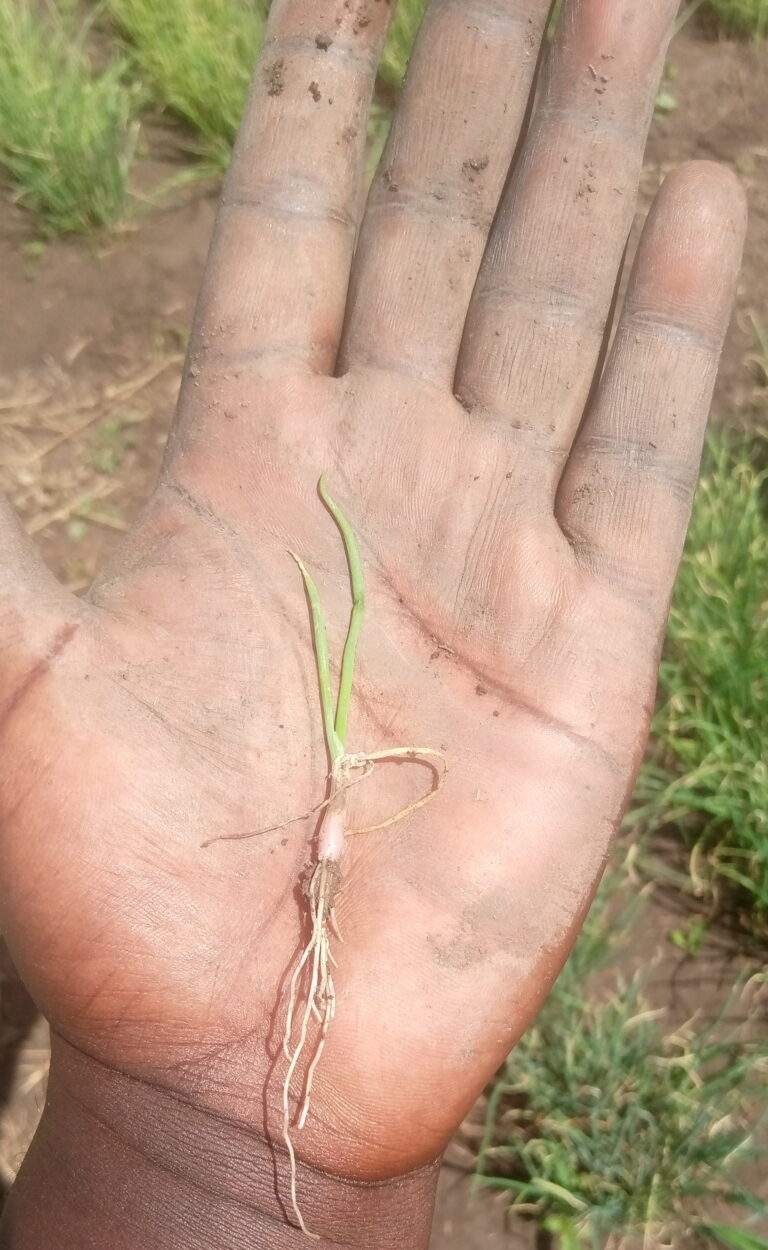
The pH Shocker
Rains came early starting from Feb 28 and relieving most of the pressure on irrigation. Rains also come with that much-needed nitrogen boost. Despite the benefit, rain also tends to wash away some minerals like Calcium and Magnesium leaving the soil more acidic. We took some samples after the rains started and pH levels were as low as 4.8 in some places and 5.4 in most patches of the 0.7-acre plot.
With such low levels, nutrient lockout would be the next outcome limiting the effectiveness of the Phosporus and Potasium we would be adding. The agronomist recomended increasing and prioritizing calcium foliar sprays and switching from CAN to Calcinit when boosting vegetative growth.
However, since the client had already bought CAN, buying another product (Calcinit at ksh5600 / 50kg) a decision as made to continue with CAN and combine it with CalciPro which costs Ksh1700 per 50kg) – as always cash may force your hand many times in the agribusiness world.
Calcipro is 95% Calcium and 5% magnesium both of which help unlock nutrients that the plant cannot uptake due to soil acidity.
Upcoming Procedures
Chemical and manual weeding – Late February to Early March
Disease and Pest Control. Mostly thrips, Purple Blotch and Downy Mildew – March
Top dressing with fertilizers and spraying foliars – April & May
Harvesting – June